How Microlearning Is Helping Organizations Improve Learning, Performance, and Employee Engagement
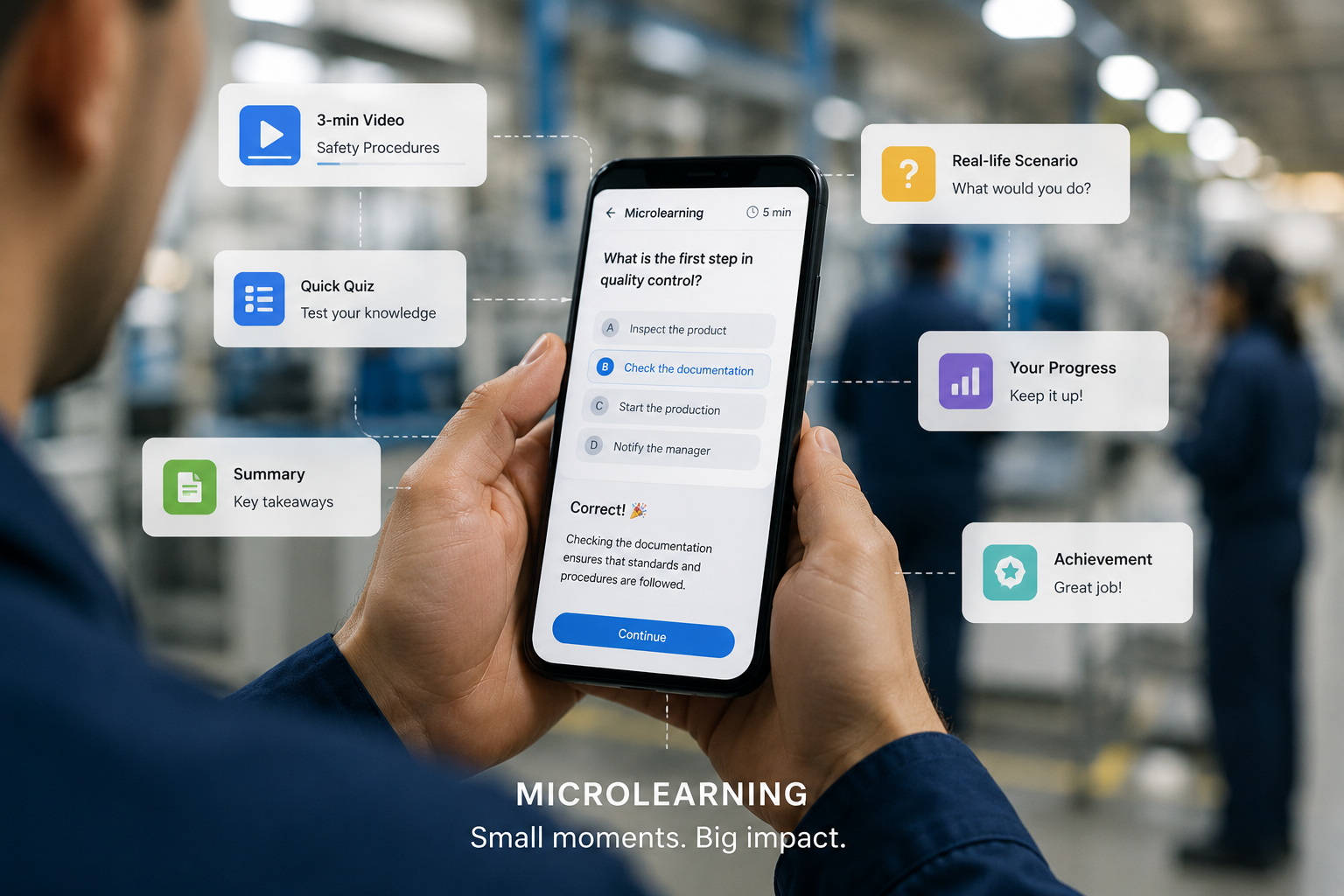
For decades, organizations have measured learning success through one simple metric: time.For years, corporate learning has been measured by one primary metric: time. Organizations invested heavily in one-hour training sessions, half-day workshops, and extensive e-learning programs based on the belief that longer training experiences would naturally produce better learning outcomes. While this approach has served organizations for decades, today's workplace realities are forcing companies to rethink how learning is delivered and consumed. Employees are expected to adapt quickly, learn continuously, and perform effectively in increasingly dynamic environments. At the same time, organizations are under pressure to improve productivity, reduce operational downtime, and maximize the return on their learning investments. As a result, Learning and Development (L&D) teams are asking an important question: does effective learning require more time, or does it require better learning experiences? Increasingly, organizations are discovering that the answer lies in microlearning. The Evolution of Corporate Learning The workplace has changed dramatically over the last decade. Employees today operate in fast-paced environments where attention is fragmented and time is limited. Production teams, supervisors, customer service representatives, quality specialists, and operational staff often struggle to dedicate several uninterrupted hours to traditional training programs. Despite this reality, the demand for continuous learning continues to grow. New technologies, changing regulations, evolving customer expectations, and increasing operational complexity require employees to learn faster than ever before. This has created a gap between traditional training methods and modern workplace needs. Organizations no longer need learning solutions that simply deliver information. They need learning experiences that support performance, reinforce knowledge, and fit naturally into employees' daily workflows. This is where microlearning has emerged as one of the most effective learning innovations in modern corporate training. What Is Microlearning? Microlearning is a learning strategy that delivers content in small, focused, and highly targeted learning experiences. Rather than overwhelming learners with large amounts of information at once, microlearning focuses on one objective, one concept, or one decision at a time. Microlearning can take many forms, including short videos, interactive quizzes, mobile learning activities, scenario-based challenges, infographics, job aids, performance support tools, and even SMS-based learning experiences. The objective of microlearning is not simply to shorten training content. Its purpose is to improve accessibility, relevance, retention, and application. When employees can access information quickly and apply it immediately, learning becomes more effective and more meaningful. Why Organizations Are Turning to Microlearning One of the biggest challenges facing organizations today is maintaining employee engagement during training. Long training sessions often compete with operational responsibilities, deadlines, meetings, and daily tasks. Even when employees complete training programs successfully, retention rates can decline significantly over time. Microlearning addresses this challenge by reducing cognitive overload and delivering learning in manageable chunks. Because learning experiences are shorter and more focused, employees are more likely to remain engaged and absorb information effectively. Organizations are also discovering that microlearning supports a culture of continuous learning by making development opportunities easier to access and less disruptive to daily operations. Learning in the Flow of Work One of the most significant developments in workplace learning is the concept of Learning in the Flow of Work. Traditionally, employees had to leave their work environment to learn. Training occurred separately from performance. Today, organizations are increasingly integrating learning directly into the workplace. Instead of requiring employees to complete lengthy courses before they encounter a challenge, organizations provide knowledge when it is needed most. Imagine a production supervisor receiving a short scenario-based question before starting a shift. Imagine a quality specialist receiving a quick reminder about a compliance procedure moments before an inspection. Imagine a customer service representative receiving a short learning reinforcement activity before interacting with clients. This approach transforms learning from an isolated event into an ongoing performance support system. The Role of Mobile Learning Mobile learning has become one of the most powerful enablers of microlearning. Employees already rely on smartphones throughout their day to communicate, access information, and perform tasks. By bringing learning directly to mobile devices, organizations eliminate many of the barriers associated with traditional training delivery. Mobile learning allows employees to learn: Anywhere Anytime At their own pace Without disrupting productivity When combined with microlearning, mobile learning creates highly accessible and engaging learning experiences that fit naturally into modern work environments. Organizations that embrace mobile learning often see improvements in participation, accessibility, and learner satisfaction. Moving Beyond Knowledge Transfer Many traditional training programs focus primarily on knowledge transfer. Their objective is to provide information and hope employees remember it when needed. However, information alone does not create business results. Performance does. Modern learning strategies focus less on delivering content and more on enabling employees to perform effectively in real-world situations. Microlearning supports this shift by helping employees access relevant information at critical moments. Instead of expecting employees to memorize large amounts of information, organizations provide targeted support that helps them make better decisions, solve problems faster, and perform tasks more effectively. The Business Benefits of Microlearning Organizations that implement microlearning strategies often experience benefits that extend beyond learning outcomes. Microlearning can help organizations: Improve employee engagement Increase learning participation rates Reinforce critical knowledge Reduce time away from work Strengthen compliance efforts Improve decision-making Support operational excellence Accelerate workforce development Perhaps most importantly, microlearning respects employees' time while still delivering meaningful learning opportunities. This balance is becoming increasingly valuable in today's business environment. Supporting a Culture of Continuous Learning Continuous learning is no longer optional. Organizations that want to remain competitive must continuously develop their workforce. Microlearning supports this objective by making learning easier to access and easier to sustain over time. Instead of viewing learning as a one-time event, employees begin to experience learning as a regular part of their workday. Small moments of learning accumulate into long-term knowledge growth and improved performance. Over time, this contributes to a stronger learning culture and a more agile workforce. The Future of Corporate Learning The future of corporate learning will not be defined by the number of training hours delivered. It will be defined by relevance, accessibility, and impact. Organizations are increasingly moving away from learning models that prioritize content volume and toward approaches that prioritize performance outcomes. Microlearning, mobile learning, and performance support are at the center of this transformation. As workplace learning continues to evolve, organizations that embrace these approaches will be better positioned to develop skilled, engaged, and high-performing employees. Microlearning is helping organizations rethink how learning is delivered, experienced, and applied. By providing employees with short, relevant, and accessible learning experiences, organizations can improve engagement, support performance, and strengthen workforce development without increasing training time. As businesses continue to navigate changing workplace demands, microlearning is proving that effective learning is not about delivering more content it is about delivering the right content at the right moment, in the right format, to help employees perform at their best.